Talk
A conversation, not a quiz.
Pick a place. Someone is there, and they speak first. You answer out loud, they answer back, and it goes wherever you take it.
Reading gives you the words. This is where you find out whether you can use them on a stranger who has no idea what you were about to say.
Included with Pro · See plansCafé Central
Lau · Ordering in a café · 3 of 20

Where it starts
Ten places to be.
Each one is a place, a person and an opening line, and none of them are fixed. The name of the café, who is behind the counter and what they say first are drawn fresh every time, so going back is not a rerun.

Ordering in a café

Running into a neighbour

Catching up with a friend

At the fruit stall

Asking the way

Sitting down to eat

Buying clothes

Checking in

In the back of a taxi

Feeling unwell at the pharmacy
The people
Someone is behind the counter.
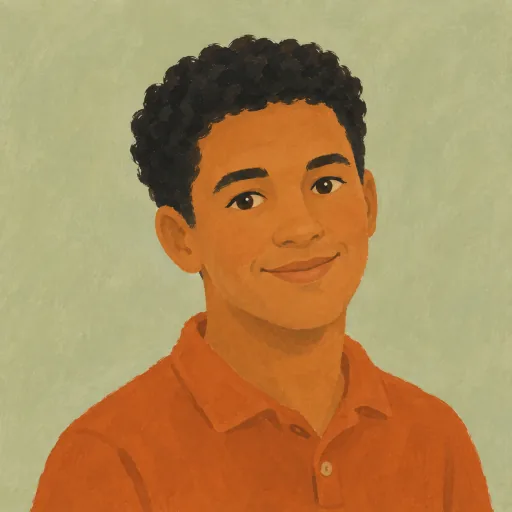
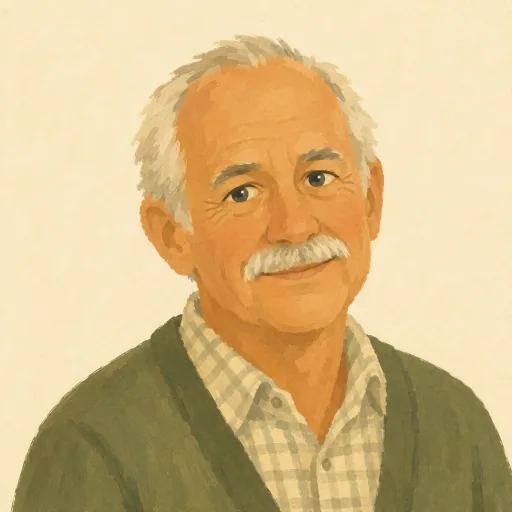
Twenty characters, each with a manner and a life of their own. A face keeps its name and its habits in every scene, and the ones who know each other say so.

Cool and a little ironic. Says less than she thinks until you make her laugh.
DJs small bars a few nights a month and says it is the same as any job: recommending things to strangers. Noodles at midnight, bitter coffee, black-and-white films. Secretly writes poetry and will deny it.

Playful and cheeky. Teases gently and exaggerates for effect.
Nineteen and doing three things at once: design school, shifts, and a sticker shop that makes almost nothing. Skateboards to work, badly. Has a crush on someone at college and is handling it terribly.

Steady and reassuring. Patient, and explains without talking down.
A physiotherapist who changed course at thirty and has not regretted it. Two small boys who treat him as climbing equipment. Runs before dawn and can explain the fall of any empire. Coaching his sons’ team this season.















The hard part
It never talks over your head.
A conversation partner told to keep it simple usually doesn't, and one sentence you can't follow just ends the conversation. So every line is checked against your own vocabulary, on your own machine before it is spoken.
Your level, taken at your word
The level you set at the start becomes a real word list: every word in the dictionary at or below it, plus everything Basics has taught you and every word in your flashcards. An intermediate who skipped the beginner course gets intermediate sentences on day one.
Everything you say
Use a word above your level and it is fair game from that moment, because you clearly know it. This is how the conversation gets harder as you do: on evidence, rather than on a guess about you.
One new word, marked
Each reply may reach one word above your level, never more, and that word is marked so it is offered rather than slipped past. A line that reaches further is thrown away and written again before you ever hear it.
When you are stuck
Four ways out, none of them a menu.
A real conversation does not pause for a lesson. These are for the moment you know what you mean and not how to say it.
Useful phrases
A handful of things worth being able to say in this place, the same every time so they can actually be learned. Tap one to hear it, then say it.
I'm stuck
Three things you could say next, written for exactly where the conversation is. Hear one, say it, carry on.
Say it in English
Do not know the word? Say the sentence in English and you see it in the language you are learning, then say that. Only what you say in that language counts as spoken.
Or type
Switch to the keyboard and back whenever you like, with the accented letters one tap away.
Crosstalk
Or speak English the whole way.
Crosstalk, the way the comprehensible-input crowd uses the word: each side speaks their own language and understands the other. You speak English. It answers in the language you are learning, at your level, and never asks you to switch.
You speak English
Say what you mean in English, every turn if you like. It understands you and stays in character, so the conversation goes on the way it would with a patient friend who happens to only answer in their own language.
It answers in the language, at your level
The reply is held to the same vocabulary ceiling as always: the words you know, the words you have used, and at most one new one, marked. Your English line is shown alongside what it would have been in the language, so you see the phrase you did not have.
Switch whenever you are ready
There is no mode to turn on or off. Answer a turn in the language and it counts; go back to English on the next one and nothing is lost. Only what you say in the language is counted as spoken, so the number stays honest.
Around the conversation
Everything else is one tap away.
Hover any word
Every line, theirs and yours, works like a page in the reader: hover a word for its meaning, and add it to your flashcards from the tooltip.
Hear it again
Tap the speaker on any line. Yours too, which is how you find out what it heard.
Take a turn again
Fluffed one? Hover your bubble and redo it. Everything after it goes, because it was a reply to something that no longer happened.
Did you mean
When what it heard looks like a mishearing, it asks, with its own transcript beside the guess, before anything counts as yours.
Pick it up later
Every conversation is saved. Come back to read it, or continue it from the line you left it on.
What it is, and is not
Twenty turns, every language.
Every language Lexxio teaches
Talk works in every language you can learn here, one way or another. The register is pinned per language, neutral Latin American Spanish, Parisian French, Brazilian Portuguese, and a character never switches halfway through a conversation.
Twenty exchanges
A conversation runs to twenty turns and winds down rather than stopping dead: long enough to get somewhere, short enough to have another.
Mostly on your machine
Hearing you and speaking back both happen locally. Only deciding what to say next reaches the network, which is why Talk is part of Pro and needs a one-time download of the speech model.
Not the Basics role-plays
The short conversations inside Basics stay as they are: they are scripted, so a unit's words are guaranteed to get used. Talk is where you go once you can hold the exchange.
Say something to someone.
Not a drill, not a script. A place, a person, and whatever you can manage, answered at the level you are actually at, with the words you already have.
Be first through the door.
Join the waitlist and we'll email you the moment Lexxio is ready to read. Anticipated late Fall 2026.