Beginner course
Start at hello. Finish a book.
Basics is the course for day one. Up to a thousand words in two parts, five hundred of them to your first book, and real books waiting at the end of each.
The real story book from the course, running here exactly as it does in the app. Press the speaker and the word being spoken lights up; press the eye and the English translation of the line appears under it; drag a corner to turn the page. Every word in this story is one the first two units taught.
A lesson
Meet it, use it, keep it.
Ten minutes, one screen at a time, and no streak nagging you into it.
Meet the word
A picture, the word, and the voice saying it. The meaning in your language is one tap away, so the sound attaches to the thing rather than to an English word standing in for it.
Then use it
Pick the picture, pick the word, then build the word from tiles or just type it. Recognition first, production last, and the wrong answers come from the same unit so no choice is free.
Then keep it
Passing a lesson puts its words into your review deck, on the same spaced-repetition schedule the rest of your reading vocabulary uses. Nothing is learned in a box of its own.
The cards
One picture per word, made for this course.
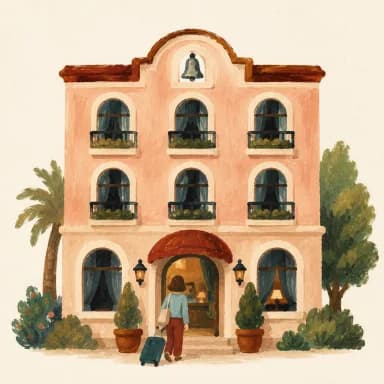
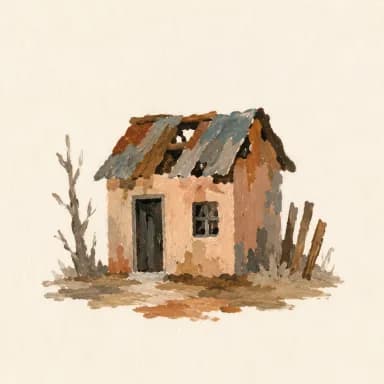

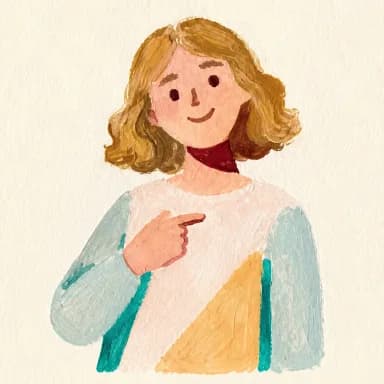
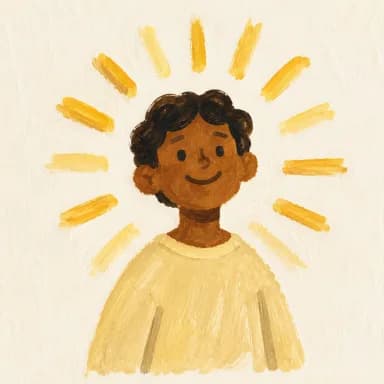
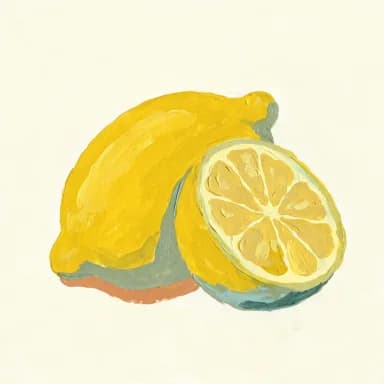


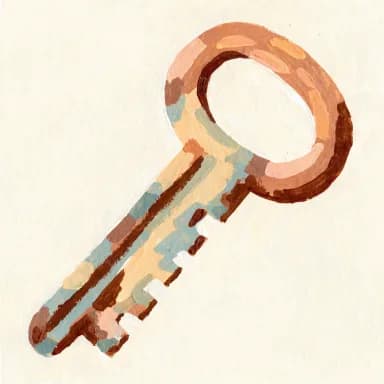
The real cards, one from each of the nine course languages; the same picture set serves every one, so a word you learn in one language is the same image in the next. Every word arrives as a picture and a voice, and your own language waits behind a tap instead of leading.
The ladder
Part one: fourteen units, five hundred words.
Chosen for one book rather than scraped off a frequency list. The sound system first, then the words a beginner actually says, then the words that book needs. Part two adds five hundred more across thirteen units and ends on two books, Spanish first and the other languages to follow.
The measure
Every unit is measured against the book.
The course carries a number most beginner courses cannot: how much of your first book you can already read. It climbs with every unit, because the word list was chosen to make it climb.
Unit
Charted for Spanish against The Blue Door at its Simple level, 2,281 words of real text. The other four courses run the same ladder and finish between 93 and 95%. Why does it start at 46% rather than zero? Because a large part of any sentence is small connecting words: the, a, of, and, my, to. The course never drills those on cards. It just tells you what one means the moment you meet it in a story, so they stop being obstacles on day one. In Spanish or French they are about half the words on a page, which is why the line starts high. Recognising them is not the same as understanding the book, of course. The words that carry the meaning are what the units go on to teach, and that is the climb you can see.
Reading, from unit one
Then it starts asking you to guess.
Nearly every unit ends with a short story. The first four use only words the lessons taught, so nothing is in your way while you are still learning how to read at all. From unit five on, each story carries one to four words it never taught you, placed where the picture and the sentence around them hand you the meaning.
That guess is the skill. Reading a language you are learning is mostly working out words nobody taught you, from what is around them, and being right often enough to keep going. The stories are where you practise it with a net: hover any word to check yourself, and the ones you met for the first time are waiting at the end of the book under their own heading.
Languages
Nine courses, one curriculum.
The same five hundred part-one concepts, written out by hand in each language rather than translated, so the traps each language sets for a beginner are handled on their own terms. Part two is in Spanish and Esperanto so far: five hundred more words in Spanish, and in Esperanto its own 284-word grammar path built on word-building, 780 words in all.
With Coach
Coach paces the new words.
Lessons sit in the middle of a guided day, after review and before anything that asks you to produce. Never more than two of them, whatever time you have: extra minutes go to review or verbs rather than a third pile of new vocabulary.
How Coach builds your weekA 15 minute Tuesday
- Flashcards3 min
- Basics8 min
- Verbs6 min
Built into a plan where Basics runs: Spanish, French, Portuguese, Italian, German and Mandarin, at A1 and A2.
The finish line
The last screen of the course is the first page of a book.
The first book is The Blue Door, a Lexxio Original that comes with the app. The course does not end on a certificate, it ends by handing you into a guided first read of a book whose words you now know. Part two ends the same way, with two books to choose from: Salvage Rights and Apartment 307.
Meet the OriginalsDay one has a course now.
Basics is in the app for Spanish, French, Portuguese, Italian, German, Mandarin, Korean, Japanese and Esperanto.
Be first through the door.
Join the waitlist and we'll email you the moment Lexxio is ready to read. Anticipated late Fall 2026.